If you’re on holiday in Nusfjord, you’ll likely have come far. You’ll probably have changed planes in Oslo, boarded another in Bodø and ended up careening over the crags of Norway’s northwestern coast in your little Dash 8 turboprop, where the dark islands look like whales breaching in the brine. Then you’ll have dipped a wing toward the Lofoten archipelago, where the bays are turquoise and the summer grass is green. You’re in the cock’s comb, almost at the top of mainland Norway and well into the Arctic Circle, to find Nusfjord: a beautiful nook in the world’s second-longest coastline (Norway is still some 100,000 kilometres behind the weathersome cliffs of Canada). This neck of the Nordic woods and its latitudinal brethren are hot because they’re cool: as southern Europe’s sizzle has turned to crackle, eyes are looking northward for a calmer balm and some old-fashionedweather. So, if you’re here and you don’t speak much Norwegian, you’ll likely have come far.Phew, you have arrived.Cabin feverMountain highNusfjord was a fabled fishing village for a thousand years, a haven on a wild coastline where boats could be safely moored and cabins built to house the hundreds of fishermen who’d rowed for days and weeks on high seas to reach this specific spot, staying for months to catch, dry, store and sell their cod. Renata Johansen, born and raised in the village, puts it better. “Every January to March theskreihas been coming down from the northern sea with his girlfriend to find the marriage bed with the perfect temperature for making babies,” she says. “What was irresistible for the fish was irresistible for the fishermen, too.” Plate expectationsJohansen is the front-of-house manager for what Nusfjord is now, which is still what you want on reaching a haven but in a very different way: a beautiful resort in which the rooms are calm, luxurious revamps of those old cabins and the administrative office for the weighing and selling of fish is now the very fine Restaurant Karoline. The rest of the village offers a swoon-inducing on-site bakery, thelandhandlerietshop and café for sandwiches, coffee and local crafts, an art gallery patronised by Norway’s Queen Sonja, a museum, a pub-and-pizza joint and a sauna that’s best enjoyed after a jump in the bloody freezing sea. It’ll toughen you up but not to the point that you’ll be like Johansen or one of her family. “Growing up here, the only child labour that was allowed in Norway is cutting the tongue out of the cod’s head. I bought myself a nice boat and a big motor with the money but we don’t offer it as an activity here for guests nowadays,” she says with a chuckle. Hitting the sweet spotWe’re soon out on the water – high above the cod – with Fred Ravneberg, Nusfjord’s general manager, his big laugh, a couple more members of his team and Caroline Krefting, whose family own Nusfjord. “In fact most of what you can see – even the mountain,” she says, with a smile that’s both proud and shy of any boastfulness. We’re out on the RIB boat for a tour that’ll take in the incredible sea eagles that nest and hunt around the bay and the Nusfjord estate’s small, private island with its very own small, private house, whose nickname seems to have stuck on the resort’s official literature: The Isolated Fisherman. But first, why get there slowly when you can rip around on that twin-engine RIB? A boat in the shape of a waterski and which appears to have been designed – and certainly today piloted – with the same thrills and spills in mind. It’s fast as hell and loves to get airborne off the waves. Lifejackets are hugged as the cold spray rains down. Greater still is the pure animal buzz of the big birds; the pair of sea eagles riding high on the updrafts above us, before swooping down on the waves to snatch a talon-full of what might well have been the leftovers of my fish. On we bounce and fly and bounce. The eagles regard us with a patient eye, then turn on their tail feathers for home and their young.In the swim of thingsView of the fjordSalteriet Galleri NusfjordCall of the wildArtisanal goods“We started this adventure eight years ago and now I feel both very grateful and very proud,” says Krefting. She is smiling into the sun’s dazzle as it dances off the sea, through the island pines and sitting room windows of the cosy cottage that, in June at least, does little justice to the name of The Isolated Fisherman. “Being here gives me a new perspective on life every time,” says Krefting. “In January we were skiing up on the mountain with wild views at 1,000 metres; where else can you see the sea from a mountaintop and almost ski down to it? And now we’re here right next to that sea and it’s another experience, to do with the season and the weather and the magic of this place.” Drinks at Oriana KroAfter the Krefting family bought Nusfjord, Caroline and her mother-in-law have ensured the accommodation and resort-wide fixtures and fittings have gone from a cheap-ish hotel-standard approach that made nothing of the cabins’ original layouts to a high-quality, low-volume, classily reserved Nordic style – all quiet luxury, cool and calm. Nusfjord, despite not having a road until the 1950s (it’s the sort of perfectly preserved picture of a place that you might stamp on a Norwegian biscuit-tin), had been inundated with camera-wielding coach-trips until the rethink and refurb. Now the village is still open for people to have a look and a coffee and poke about but some subtle yet firm pressure has helped bid the coachesadjø. There seems to be an honesty and a tenderness to the relationship between Krefting and, for example, Nusfjord-born Johansen’s family. Krefting talks of the “great warmth, great stories, great laughs” that go with the territory here and that she feels fortunate to have been involved with. “We also just had this goal which is about authentic experiences,” she says, “and that you don’t need to choose between comfort and nature – I hope we’ve woven both together here.”Cosy accommodationPeak performanceFlying highSerene watersThe weaving has indeed wrought a happy tapestry. Nusfjord’s village-first, hotel-later atmosphere is achieved through the open-air museum style of the resort but also by the charming staff, almost all of whom live here. Of course Nusfjord’s Nordic spa boasts a suite of treatments but maybe it expects you to have also broken a sweat outside of its sauna. Anyone for an adventure?“Haha! You’re in!” says Ravneberg, big laugh on full beam, on our fishing trip aboardElltor, the resort’s handsome boat. “Now wind him in, nice and smooth.” Out of the mill-pond-still of Nusfjord’s bay, we’re reeling again on the swells of the Norwegian Sea. A light breakfast seemed a wise choice: eyes on the horizon, breathe through your nose and focus on being flattered as a half-decent fisherman by a man who knows more than you about the ways of cod, coalfish, hake and halibut – and not because they were presented on a bed of samphire under Restaurant Karoline’s candlelight last night. There’s some angling banter about how I must have got lucky last night to be so lucky with the rod this morning, which we’ll let fly away on the Arctic breeze. Suffice to say, a respectful haul was had. Gutted, cleaned and into the ice they go, in order to be delivered to a beaming chef on dry land later. Fish soup, sir, caught by yourself? Ooh,ja vennligst.Lunch with a view of the surroundsWarmth in the wild at Nusfjord SpaFamily prideThe nature is really the thing. For all the laid-on activities, as lively or contemplative as they might be, the best thing photographer Ivar and I did was walk to the summit of the huge hill that looks over the village. It’s a decent hike, complete with knee-deep June snow in parts. The reward is the view at the top, the beer at the bottom and the kinship of walking together. Dinner at Restaurant Karoline – mostly fished, reared or grown nearby – was manna, a rum nightcap was nectar and the cabin and the bed – just right, just perfect – were heaven. That and the journey because you may well have come a long way but phew: you have arrived.nusfjordarcticresort.comWhat to packYou’ll want to indulge in all things Nusfjord on your trip, and that means dressing for the Nordic summer during the year’s middle months and being ready for almost anything for the rest of the year. The summer in Nusfjord typically means 10C to 15C but it can easily get up to 20C or dip into single figures when the wind has an edge. Take a bathing costume for the hot tub and a dip in the Arctic Sea (the sauna at Nusfjord is also swimmers-on); waterproof hiking boots; and a good rain jacket and hiking trousers (not the swishy kind, for the sake of Odin’s beard). And pack an eye mask: 24-hour sunlight can be as maddening as it is intriguing.What to seeThe Lofoten archipelago is a place of jaw-dropping beauty. Leknes, where we landed, would be a good spot to hire a car or you may wish to start further east into Norway to drive the length of the snaking peninsula, to end at the western tip and the succinctly-named Å. Along the route you’ll see many stunning beaches where you might do a double-take at the sight of plucky surfers in inch-thick wetsuits. Unstad beach is a popular spot to watch before getting a lesson courtesy of the Lofoten Surfsenter, where “Jack Frost”, the Lebowski-like local guru and proprietor, will regale you with tales of surfing among the ice floes in winter.Three books to get you in the mood‘A Woman in the Polar Night’byChristiane RitterThe 1930s memoir of an Austrian woman who left urban comforts behind to live with her explorer husband for a year in a shack in Arctic Spitsbergen. This classic of travel-writing witnesses months of near madness before her conversion to the Arctic’s lunar beauty.‘The Ice Palace’byTarjei VesaasA strange and allegorical coming-of-age tale about two girls on the brink of becoming young women in postwar rural Norway. Are Siss and Unn separate girls or halves of the same character? A sharp shock of powerful storytelling – the equivalent of a psychological ice-bath.‘Kon Tiki Man’byThor HeyerdahlThis is about the late, great Norwegian explorer and ethnographer rather than about his home country but there is much of the Nordic temperament in Heyerdahl’s unfussy prose. It describes an 8,000km cross-Pacific odyssey that he undertook on a hand-built raft in 1947.
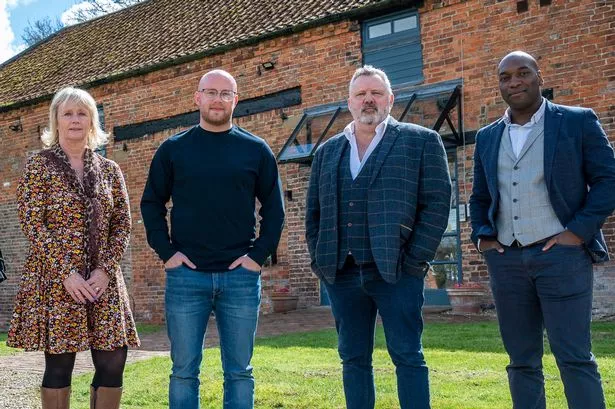
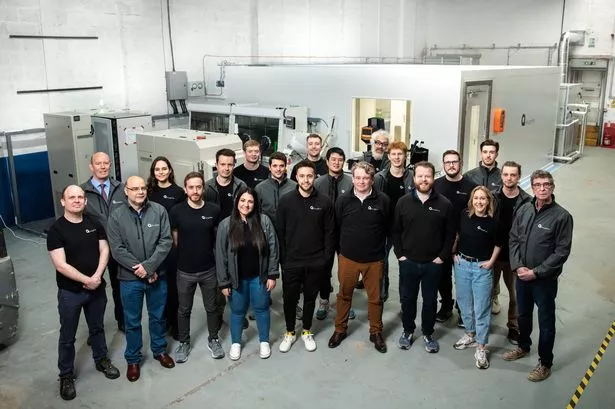
Payments tech firm Card Industry Professionals has been acquired by New York Stock Exchange-listed Shift4 in an undisclosed deal. The Northern Powerhouse Investment Fund (NPIF)-backed business has become part of Shift4's global operation which processes $260bn of transactions annually. The deal represents an exit for Mercia Ventures, which backed the firm in 2022 to the tune of £850,000 using NPIF and Midlands Engine Investment Fund money. Card Industry Professionals was launched in 2017 by young entrepreneur Ciaran Savage, who was joined by his month, Lyn Savage as operations director and John Selby as sales director. The Aylesby-based firm now employs 20 people and has a network of more than 150 sales agents, and processes more than £60m of transactions each month. Ciaran Savage, founder and managing director, said: "We are excited to be joining the Shift4 family. We are committed to upholding the company values and best-in-class service customers have come to expect from us and are confident that this acquisition will allow us to improve upon those service levels, while offering even more value in the form of new benefits, incentives and product offerings." Maurice Disasi of Mercia Ventures added: "We’re delighted to have supported CIP on its growth journey. Ciaran and the team have built a business with first-class customer support and Shift4 now has the benefit of adding a strong and well-respected team here in the UK as part of their global operations. We wish the team continued success."

A County Durham couple will become the latest regional business to brave the Dragons’ Den this week. Zara Paul and Aaron Morris are the founders of Choppity, a Belmont Business Park company behind a web-based AI video editing platform which is set to appear on the new series of the BBC pitching programme on Thursday in a bid to secure investment for their start-up. The co-founders and married couple only launched Choppity in 2023 with a vision to simplify the video-editing process for podcasters and businesses. The platform, which was founded in Durham, is already used in production by companies including ITN, Autotrader, Turtle Bay, and Sonatype, with features including AI subtitles, in which Choppity instantly adds subtitles to podcast clips, and Magic Reframe, which instantly turns a landscape podcast into a portrait or square one to make sure every speaker’s face can be seen. Before taking on the Dragons, the pair said their number one target for investment was entrepreneur and host of one of the world’s most listened-to podcasts, Diary of a CEO, Steven Bartlett. Zara proudly represents the LGBTQ+ community as an openly non-binary contestant, and said the experience was “important and deeply personal”. Zara said: “It was an unforgettable moment to be in that room, presenting something we’ve worked so hard on. The setup felt incredibly stripped back - just the two of us and a screen in front of the five established entrepreneurs. It was both nerve-wracking and exhilarating. “The startup world, and the media more broadly, often feel bare of LGBTQ+ representation, especially for gender non-conforming and trans founders. I hope this moment inspires others to pursue their ambitions and know they belong here too.” In a LinkedIn post the firm said: “After months of secrecy, we’re so excited to finally reveal the news. Watch the episode this Thursday 16th January, 8pm on BBC 1 to find out what the Dragons thought of Choppity. For those that have been following our company’s journey for a while, I hope you have fun watching this episode! “We’re extremely grateful for the opportunity to showcase Choppity on a national stage. To all of our users, customers and supporters, thank you for helping us get here.”

Prime Minister Keir Starmer has announced 1,000 new tech jobs for Liverpool City Region as he pledged to 'relight the fires of innovation' through Artificial Intelligence (AI). The PM told BusinessLive's sister title the Liverpool Echo that American group Kyndryl, the world's leading IT infrastructure services provider is set to open a new tech hub in the Liverpool City Region, which will generate 1,000 jobs over the coming three years. Sir Keir told the Echo: "Liverpool voted for change in July. And my Labour government has been working tirelessly to deliver on that change. We're starting to reap the rewards of that hard work. "Last November I visited Runcorn to announce 2,000 jobs in the region - thanks to our £22 billion investment in Carbon Capture. Today I can announce that yet more jobs are coming as Kyndryl has committed to an extra 1,000 AI-related jobs over the next three years. He continued: "These are jobs of the future that will relight the fires of innovation across the Liverpool City Region. It means working people - from the Wirral to St Helens - will feel the change we promised. "I promised the Echo that I would turbocharge this great region, and here is the proof. Working hand in hand with Mayor Steve Rotheram, today's announcement shows how Labour in power is delivering for working people." Sir Keir's government said the new tech hub "will share the government's ambition to roll AI out across the country to help grow the economy and foster the next generation of talent." The Liverpool news comes as part of a broader government announcement, which states that AI will be 'unleashed' across the UK in an effort to "help turbocharge growth and boost living standards". The Prime Minister unveiled details of the government's AI Opportunities Action Plan today, stating that AI can "transform the lives of working people". Sir Keir added that the new technology "has the potential to speed up planning consultations to get Britain building, can help drive down admin for teachers so they can get on with teaching children, and feed AI through cameras to spot potholes and help improve roads. " The Prime Minister emphasised his government's commitment to this industry by agreeing to implement all 50 recommendations set out by Matt Clifford in his "game-changing" AI Opportunities Action Plan. The Prime Minister said: "Artificial Intelligence will drive incredible change in our country. From teachers personalising lessons, to supporting small businesses with their record-keeping, to speeding up planning applications, it has the potential to transform the lives of working people. "But the AI industry needs a government that is on their side, one that won't sit back and let opportunities slip through its fingers. And in a world of fierce competition, we cannot stand by. We must move fast and take action to win the global race. "Our plan will make Britain the world leader. It will give the industry the foundation it needs and will turbocharge the Plan for Change. That means more jobs and investment in the UK, more money in people's pockets, and transformed public services. That's the change this government is delivering." Chancellor Rachel Reeves said: "AI is a powerful tool that will help grow our economy, make our public services more efficient and open up new opportunities to help improve living standards. "This action plan is the government's modern industrial strategy in action. Attracting AI businesses to the UK, bringing in new investment, creating new jobs and turbocharging our Plan for Change. This means better living standards in every part of the United Kingdom and working people have more money in their pocket."

In the summer of 2007, Monocle launched its inaugural Quality of Life Survey as we searched for the best cities in the world to call home. Though other city-ranking indexes existed, we felt that they came to some poor conclusions. Had their compilers, we wondered, ever looked up from their spreadsheets of metrics to ask a few simple questions: is this city, which sounds good on paper, a fun place to live? Is it accepting of outsiders? Can you go to a bar at 01.00? Is it easy and pleasant to get around by foot, tram or bicycle? We were suspicious that the authors of these reports, well-meaning statisticians, hadn’t visited all of the cities that they lauded. So we saw an opportunity to create a survey that homed in on true liveability – what it was really like to reside in a place. Yes, we would gather statistics but we would also ask our network of correspondents and editors to tell us what was really happening in their hometowns.Not surprisingly, some cities have always flourished in our survey – often medium-sized metropilses that have invested wisely in infrastructure for generations, have nature on their side and sit in wealthy nations. So, this year, we wanted to put more cities in the spotlight – places that might struggle to get to the front of the pack if you take in every data point but are clear winners when you consider one key metric. I won’t spoil all of the fun here but for 2025 we have chosen 10 winners – yes, we have an overall champion but also nine more cities that deserve to be garlanded for their safe streets (without having your every move watched on CCTV), start-up culture and nightlife. Congratulations to all of the upstarts that made the podium this year.While we’re on the topic of Quality of Life, are you coming to our annual conference on this very subject? It’s taking place in Barcelona from Thursday 4 to Saturday 6 September. There’s a welcome reception on the first day, followed by a day of talks and panels looking at how we can improve our cities, retail, hospitality and the world of work – and a fun dinner that night. Then, for the final day, after breakfast, we have organised trips to ateliers, galleries and more, all with special access. There’ll be no lanyards; you’ll be looked after by Monocle staff; and, by the end of the event, you will have met numerous people with ambitious ideas and great perspectives on the world. You can sign up atmonocle.com/eventsor email my colleague – and head of events – Hannah Grundy athg@monocle.com.In 2023 we organised another one of our talk series, The Weekender, in Asheville, North Carolina. We had a great few days exploring the city as we met chefs, campaigners and ceramicists, and we had a pop-up shop at Citizen Vinyl. Being in this lush outpost in the Blue Ridge Mountains was a special experience. It’s why last September’s news that whole parts of the city had been washed away in the floods that followed Hurricane Helene really hit home at Monocle. For this issue, Alexis Self visited the city to see how it has responded and how the determination of people to rebuild has come to the fore, even as huge challenges remain. Perhaps that’s something else we should evaluate when creating our city survey: the ability of a community to come together, to find common purpose.This being summer – in the northern hemisphere, at least – we have also ensured that this issue has plenty of moments of pure joy. We have dedicated our Expo to 21 things to make your summer pop (from the perfect sliders to the best outdoor cinema) and, in our culture pages, have compiled a sunny checklist of music, books and films to entertain you on your poolside lounger.And there’s one final story, also in culture, that’s important to highlight: our report on kiosks. Magazines such as Monocle only thrive in cities that care about having an informed and entertained citizenry. It’s painful to watch as city halls hand the licences for their kiosks to people who just want to use them to sell soft drinks. The reason why kiosks fail is that they don’t have inspirational owners. If you don’t believe me, meet the people who keep their city’s kiosks thriving. We need these media stars.Finally, thank you for reading Monocle – whether purchased from a newsstand or as a subscriber (well, you do get a discount on your conference ticket). As always, feel free to drop me an email –at@monocle.com– with ideas, feedback or just your Barcelona confirmation.

With its four “fingers” stretching out into the Aegean, the Peloponnese is a defining part of Greece’s geography: its hand-like shape helps to make the country’s outline immediately recognisable on a map. Yet its shores have long been under-explored by those international visitors who, after landing in Athens, hop straight onto a ferry bound for one of the country’s islands. Perhaps unsurprisingly, this largely unspoilt area has instead served as the setting of many a Greek childhood summer – and, in recent years, it has been luring back nostalgic domestic entrepreneurs seeking to give it a well-deserved update.The Mple Kanarini restaurant in KalamataThe drive from Athens to Corinth, which sits on one side of the isthmus dividing the mainland from this sizeable peninsula, is only an hour long. But the scenery soon becomes more rural and the roads wilder. Most will know this territory as the home of Sparta, the much mythologised rival to Athens in antiquity. But the Peloponnese’s role in Greek history begins long before that, as the seat of the Mycenian civilisation during the last phase of the Bronze Age. Many cities that signify Greekness abroad can be found here, including Olympia, the birthplace of world’s most renowned sporting event, and Kalamata, known for its olives.Fresh catch at Porto HeliDining at the Kinsterna Hotel in MonemvasiaWhile many who head to the Cyclades relish the chance to avoid driving on holiday, the Peloponnese rewards an old-school roadtrip approach. You’ll have to get behind the wheel to reach some of the remote villages and thick pine forests, which later descend into semi-deserted coves.Outside the Patrick Leigh Fermor HouseView from Lela’s Taverna in KardamiliThe region is a combination of starkly different terrains. You can start your day in the mountainous wilderness of Arcadia and soon be scattering your towel on the pebbly shores of the Argolic Gulf. The Mani peninsula, the Peloponnese’s middle finger, is said to have the area’s most spectacularly crystalline waters. Though grand hotels clinging on to steep hills can make for dramatic accommodation options, this is a place of rustic guesthouses, where the sun filters through olive groves and afternoons are soundtracked by the hypnotic buzz of cicadas. Lunches at old-school tavernas are practically mandatory, though many ambitious chefs are rethinking the region’s traditional fare. Here is our pick of the essential stop-offs to explore.Room at the Opora hotelKonstantinos Markidis, owner of the Opora Country Living hotelStay: Kinsterna Hotel, MonemvasiaThis hotel near the town of Monemvasia is housed in a 17th-century mansion that looks out to the Aegean. The surrounding farm, vineyard and olive groves supply the kitchen with oil, wine and fresh produce.kinsternahotel.grStay: Opora Country Living, NafplioOwner Konstantinos Markidis decided to renovate his family’s traditional stone farmhouse in 2015. Tucked away in the hills, this guesthouse has a handful of self-contained rooms, as well as a delightful pool.oporacountryliving.comStay: Amanzoe, Porto HeliHigh up on a hill on the Argolis peninsula, this Aman property is designed with Hellenic simplicity in mind. Made up of marble-clad villas and column-lined, Parthenon-like pavilions, it nods aesthetically to the Acropolis and its temples.aman.comStay: Laspi, PefkaliA brutalist-inspired construction made up of two villas on a hillside on the northern Peloponnese coastline. Inside, the raw concrete is balanced out by warm interiors.laspi.lifeEat: Mple Kanarini, KalamataAfter a stint working abroad, chef Konstantinos Vasiliadis returned to his hometown of Kalamata to celebrate the bounty of the southern Peloponnese. Signature dishes, such as stuffed courgette flowers in tomato sauce, reimagine traditional staples.Kritis 34, KalamataEat: Lela’s Taverna, KardamiliGiorgos Giannakeas has been running this restaurant alongside his brother since taking over from their mother, Lela, who established it in 1983. The menu now offers more contemporary options but the taverna’s spirit of easy hospitality has not changed.lelastaverna.comSpa: Euphoria Retreat, MystrasThe region’s celebrated Byzantine churches provided inspiration for the centrepiece of this spa resort: a cave-like thermal pool painted in shades of blue and green.euphoriaretreat.comGetting here: Though the cities of Kalamata and Patras have airports, Athens is far better connected. The drive from Attica can become part of a well-planned roadtrip.

1.Pulso HotelSão PauloBar at PulsoSão Paulo, Brazil’s most sprawling metropolis, is the heartbeat of the nation – which is why Otávio Suriani decided to name his latest hotel in the city Pulso. “It’s a word that’s linked to music and movement, both things that we want to bring to the hotel,” he says. Designed by architect Arthur Casas, Pulso sits on the border between the Faria Lima financial district and the buzzy Pinheiros district. It offers 52 apartments and five suites, all dressed in elegant neutral tones. “Casas designed the entire complex, from the façade to the small details on the lamps,” says Suriani.Pulso pays tribute to two of the city’s biggest strengths: nightlife and food. Chef Charlô Whately oversees the hotel’s Restaurante Charlô and Boulangerie Cha Cha, the latter of which is part bakery, part deli. “This is a city that never sleeps,” says Suriani. “Our nightlife is crazy.” You can experience it for yourself at Pulso’s Bar Sarau, which is always ready to welcome those craving a nightcap and some intoxicating bossa nova.pulsohotel.com2.YoruyaKurashikiCentury-old exteriorsThe city of Kurashiki in western Japan has long attracted enthusiasts of folk arts and crafts – it’s home to the Kurashiki Mingeikan, a museum dedicated to the subject – but it also has plenty to offer for those with more contemporary tastes. Fans of modernism will want to visit the Kurashiki City Art Museum, designed by Kenzo Tange, one of Japan’s great postwar architects. Day trippers, meanwhile, come to see the old buildings and tree-lined waterways. Until recently, however, anyone wanting to stay overnight would have struggled to find accommodation to match the surroundings. Now they have somewhere that fits the bill: Yoruya, a 13-room inn in a sensitively converted and extended former kimono merchant’s residence.The century-old building’s original exterior has been retained, with a simple lantern above the door. Inside, the layout has been designed to mimic the traditional narrow streets known ashiyasaithat are a distinctive feature of Kurashiki’s historic centre. Tokyo-based studio Simplicity has brought its signature modern craft style to the interiors – think white plastered walls, well-chosen Japanese prints and art books. The rooms couldn’t be more serene, with low mattresses, cotton pyjamas and baths that are open to the elements.Minimalist interiors by Simplicity studioThe operations team, Naru Developments, is led by hoteliers Yuta Oka and Fumitomo Hayase. They’ll be familiar to anyone who has stayed at Tokyo’s Hotel K5 or Onomichi’s Azumi Setoda. Dinner in Yoruya’s counter restaurant centres on local produce: chef Fumio Niimi prepares anomakasedinner that features such delicacies as clam cooked in a whole yuzu fruit and Okayama Nagi beef. Yoruya’s invitingly low-lit bar is open to non-residents; it’s well worth stopping in for a glass of wine or a local saké. Breakfast, best taken in the garden with its flowering crepe myrtle tree, is another treat. Expect fresh sesame tofu, grilledmamakarisardines (a regional speciality) and the chef’s homemade Japanese grape jelly. It’s a perfect start to the day before you hit Kurashiki’s streets to explore the city’s many cultural and historic delights.yoruya-kurashiki.com3.Hôtel DalilaParisStroll through Montmartre and you’re almost certain to spot a few flowers hanging from residents’ balconies. The recently opened Hôtel Dalila in Paris’s 18th arrondissement is fittingly floral. Its 49 rooms, breakfast area and workspaces were conceived by Bordeaux-based Giovanna de Bosredon (pictured) of Auguri Studio, who designed the seven-floor hotel to resemble a comfortably lived-in Paris apartment.“Our work here was a combination of architecture, interior design and curating vintage pieces,” says De Bosredon. “Inside the hotel, the chequered tiles and caning are in Montmartre’s colour palettes: the green of its squares, the red of the wine and the orange of the famous Lapin-Agile cabaret.” Among the vintage pieces are a bistro bar made from zinc and metal lamps by French architect and designer Charlotte Perriand.This mishmash of old-school elements is complemented by more modern Hay sconces, bold carpet colours and metal furniture that echoes the seats found in public parks. The finishing touch? A view of the Basilique du Sacré Coeur. Hôtel Dalila is a true neighbourhood gem. Bravo!hoteldalila.com